
Jared and I did the Tahoe Sierra Century last weekend on a rented tandem. It was pretty intense, but we survived. It included a 6,800 foot vertical gain over the 100 miles, which is no Death Ride (15K feet over 129 miles) but impressive anyway. I'm sure you'd agree.
I really enjoyed riding the tandem with Jared, and he says it was OK too. It resolved a lot of issues that have come up with pace and talking while riding. I'm terrified to descend quickly, and there were some pretty serious descents on this ride, but I just closed my eyes and crouched against Jared's back side. We lived. We're always near each other; so, talking is only a problem when it's windy.
It's also an interesting exercise for a couple. You have to pedal in cync and communicate with your partner what you're doing and when. We chatted with one guy who said that he had been married for 25 years, and he and his wife DO NOT like to ride a tandem together. They learned that they need separate bikes. I quickly became comfortable with Jared doing all the steering -- I didn't need to look out for potholes or lean for corners. I needed to do what he asked me to do (stand, sit, work, etc.).
Sunday, September 24, 2006

Tuesday, September 19, 2006
Alaska (and Hood Canal) vacation

Jared has compiled, processed, titled, and posted our photos here (on 3 pages). It was my intension to post these with my trip narrative, but alas, he's way faster than I am (probably bc he has less time; have you heard the quote, "if you want something done, give it to someone who's busy"?).
Here are a few of my highlights:
1) the Salmon Migration
The creeks held literally more fish than water. You've seen the documentaries, and how amazing it is when they jump up stream. It was like that except that there really wasn't enough space for them all. They were each about the size of a boot (Jared identified various species), and when one advanced, it had to bite its companions to get them to move out of the way. I think we took a movie, but I'm not sure if it came out.
2) the Mendenhall Glacier
Huge, and absolutely phenomenal... The day we hiked up the west trail blew my mind. Make sure to try to find the people in that one photo of it on page 2. It will give you a sense of scale. I heard someone say this glacier moves 500 feet per year. Can you imagine the sheer force of an environmental event like that???!
3) the Ferry
Basically, I want to be on the ferry all the time. It's comfortable. Beautiful scenery floats past. Showers are clean and hot. It has $2.50 beers (Alaskan). The food is decent and reasonably priced. There's unlimited free hot water. Other people camping on the deck are interesting and friendly. Yeah, when you're bike-camping in the rain for 2.5 weeks maybe your standards change, but if I did this trip all over again, I would have stayed on the boat most of the time. If you go, DO NOT get a stateroom; camp on the deck.
4) the Beer
Both Haines Brewing Company (which does not distribute outside Haines) and Alaskan make great beer. At Haines, my favorites were the IPA and the Stout. At Alaskan, the ESB and... was it the stout again? I might be able to get Jared to remind me.
5) the Bear
It was a relatively brief event. You can see the dark photo. We were cooking dinner at the camp site at Mendenhall when a medium-sized black ambled into our camp, about 10 feet away, looking as if he might crawl into our tent for a little nap. He was fat and had a beautiful glossy coat. I gasped but completely forgot how you're supposed to behave. Jared yelled and waved his hands around. The bear rolled his eyes at us ("ah, campers. I wish they'd stay out of my forest," he seemed to be saying) and ambled away. Nearby a group of kids were camping, and I heard one little boy making up a song about the bear ("there was a bear. there was a bear. there was a bear right over there..."). I think he ambled thru their camp site too.
6) the Seafood
Not in AK, but the crab pot-pulling and eating in Hood Canal was awesome. Jared's mom made some crab cakes which were especially memorable. The halibut and chips in Juneau rocked too.
7) the Company
Of course
I'll post some stories another time.
Monday, September 18, 2006
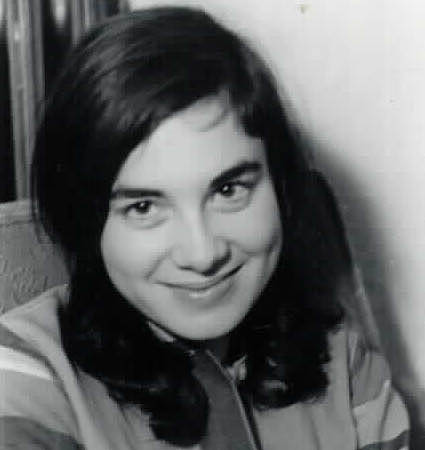
Me trying to look like my mother
I visited my friend Carolyn Helmke today in Palo Alto. She set me up with some great work clothes, some hand-me-down magazines, and a free burrito. After some conversation, she decided it was important to take a picture of me that resembled this one I posted of my mother. Here's our best effort:


Your friends will save your brain... and your life.
A recent study by the Rush University Medical Center in Chicago found that women with a number of close friends and frequent social interactions are less likely to suffer from heart disease, Alzheimer's and dementia.
Friday, September 15, 2006
I sold my TV!
Craigslist is amazing! Should I admit that I got nearly what I paid for it?
In other news, studies show that tall people earn more money than short people by 2% per inch. Also, input increases output. The source of productivity is a refreshed mind.
Source for both: my NPR Podcasts
In other news, studies show that tall people earn more money than short people by 2% per inch. Also, input increases output. The source of productivity is a refreshed mind.
Source for both: my NPR Podcasts
Wednesday, September 13, 2006
Moving towards a totally self-programmed world
I don't remember if I've mentioned that I have become completely obsessed with podcasts recently. I basically don't even listen to the radio or look at google news anymore, because I now get my news from the sources and on the topics that I've pre-selected. I'm also actively pursuing selling my TV, and may join a DVD rental club to be entertained entirely by pre-selected programs on my computer.
However, I'm a little scared. I was not permitted to watch television as a child, which made me even more of a misfit than my personality and genetics had already set me up to be. I had no idea what the other kids were talking about and rarely got the mass-media-referential jokes. I would laugh anyway, but they saw right thru me. You know how kids are. So, I'm wondering now if, by self-programming all my media inputs, am I isolating myself yet again? Or is this something everyone is doing? And if it is, are we isolating ourselves from each other?
I don't remember if it was the last national election or the one before that when a lot emails went around about how we, humor me as I call us the Educated Class, have no idea what's going on in the minds of the rest of our country. Because if they were privy to even the smallest amt of knowledge and information we were, how on earth would we, collectively, have elected That Man as our President? We all vowed to talk to our distant friends and relatives who might be Republicans or even just live not on a coast, to share information, to promote Democracy. I've tried to do that. At the same time, now, I'm setting up my own little self-programmed universe where everyone I talk to less than once a week is getting their information from absolutely, completely different sources.
This hints at the concept of brainwashing, and the effect media has on culture, but I'm in no mood to go there right now. I know you want to hear about Alaska, and I'll tell you all about it... later.
However, I'm a little scared. I was not permitted to watch television as a child, which made me even more of a misfit than my personality and genetics had already set me up to be. I had no idea what the other kids were talking about and rarely got the mass-media-referential jokes. I would laugh anyway, but they saw right thru me. You know how kids are. So, I'm wondering now if, by self-programming all my media inputs, am I isolating myself yet again? Or is this something everyone is doing? And if it is, are we isolating ourselves from each other?
I don't remember if it was the last national election or the one before that when a lot emails went around about how we, humor me as I call us the Educated Class, have no idea what's going on in the minds of the rest of our country. Because if they were privy to even the smallest amt of knowledge and information we were, how on earth would we, collectively, have elected That Man as our President? We all vowed to talk to our distant friends and relatives who might be Republicans or even just live not on a coast, to share information, to promote Democracy. I've tried to do that. At the same time, now, I'm setting up my own little self-programmed universe where everyone I talk to less than once a week is getting their information from absolutely, completely different sources.
This hints at the concept of brainwashing, and the effect media has on culture, but I'm in no mood to go there right now. I know you want to hear about Alaska, and I'll tell you all about it... later.
Teenagers
My friend Carolyn Helmke said a very interesting thing on the phone today that I wanted to share with you. She suggested that, biologically, the reason teenagers are so unpleasant to their parents is to make it easier, perhaps even possible, for the parents to let them leave the nest. Sure, everyone always talks about teenagers' need to individuate, but I never thought about it as something that the parents need to let them.
Monday, August 14, 2006
Alaska vacation
Jared and I are going to Alaska for 3 weeks on Thursday. I know I haven't posted very regularly lately, but I didn't want you to worry if I don't post for a few weeks. I will be available by mobile phone.
We fly to Seattle on Thursday morning. There, we'll spend a few days with Jared's family on Hood Canal where they keep a little vacation house. Tuesday evening, we board a ferry from Bellingham to Wrangell, AK where we arrive 2 days later. We fly out of Sitka 2.5 weeks later. What happens in between is anyone's guess, but I bet it will involve a tent. I've heard it's beautiful up there, and I'm looking forward to telling you all about it.
We fly to Seattle on Thursday morning. There, we'll spend a few days with Jared's family on Hood Canal where they keep a little vacation house. Tuesday evening, we board a ferry from Bellingham to Wrangell, AK where we arrive 2 days later. We fly out of Sitka 2.5 weeks later. What happens in between is anyone's guess, but I bet it will involve a tent. I've heard it's beautiful up there, and I'm looking forward to telling you all about it.
Thursday, August 03, 2006
On making love stay....
Finally, my response to the Bronson/Merryman article on predicting marital longevity.
My first thought out of the gate here is: what makes us think that relationships are supposed to last? Why, as a society, do we hope for love to stay? Maybe love is something that happens now and then and passes, sort of like food poisoning? One of the things my friends and I like to remind ourselves of is to stop beating ourselves up for things we just aren’t.
Biologically, the t-shirt study (Wedekind, 1995) indicated that women are programmed to go out into the world and get ourselves knocked up by men who we are genetically different from, and, then, have men who are genetically similar to us care for us thru delivery until, presumably, we’re ready to get knocked up again. (I extrapolate wildly.) So, this provides scientific evidence towards cynicism? I believe the lifelong partner concept may be some kind of perverse sociological infliction, like sleeping at night or the right to parking, but that doesn’t mean I don’t want one.
There was one night in Paris, Christian and I were on our 3rd bottle of wine, and I talked how surprised I am every time a relationship ends. He said (I paraphrase) “You always think they’re going to last forever at the beginning. You have to, or you wouldn’t be able fall in love.” It’s that suspension of disbelief that they talk about in the theater; you forget that your feet are on the ground in a world where the only things you can count on are death and taxes. On the other hand, I also believe that there are times when you just know the future of a relationship, either way.
More recently, Jared was telling me about this book he read on primates. He claimed it explains in detail why primates couple, and why, from a biological stand point, that works best. He didn’t remember all the details of the argument, but he did say that the book argued, from a biological standpoint, that coupling is more advantageous for women (and female primates), and that’s the reason male infidelity is more common. I found this last statement somewhat shocking. Sure, it’s the stereotype that male infidelity is more common, but I think that’s mythology. In the mainstream, women are just better at keeping secrets than men, and men are more likely to brag about their conquests. In my social universe, male infidelity definitely isn’t more common.
Life is long and complicated, and nearly everything is transient. Some humans have a greater need for the feeling of permanence than others. Some, even, thrive in an environment of impermanence and stability makes them nervous. So, yeah, nothing lasts forever and we are born to die, but the real question we need to address is “how are we going to live?” I want to live like all my dreams will come true. I want to believe in unicorns and fairy god mothers. The power of positive thinking can’t be underestimated.
It’s like Alison said “getting married is the most optimistic act I have ever committed.” She also said: “It’s practical, you get rights and recognition instantly, and telling people you are committed does strengthen your commitment. It is also an optimistic act (like having a child), and we all need more optimistic acts. When else can you get people to celebrate you, what you are doing in your life?”
But there is sometimes some confusion. Some people seem to think that getting married is a rite of passage. You graduate; you get married; you have a family, each at a certain stage in your life. It’s what you do. This offends my idealistic vision of Love. Kevin used to point out that the bible recommends staying single; that marriage is something you do only in the rare case that you fall in love. That makes sense to me. I’m sure you’ve heard my tirade against the music industry for brain washing us into believing that the only time we’ll feel anything strongly is thru falling in love. It’s this type of message that creates a society of complacents. The world contains so many other things we should feel passionately about, and we certainly can’t expect that to come from another person very often.
Yet, some of us are love-prone. I’m not going to try to find the citation, but I remember my mother reading years ago that if you have fallen in love more than 6 times in your lifetime, you are “love prone” and you present a small percentage of the population. My mother, of course, is love-prone. I’m, of course, wondering how we’re defining “in love”.
So, when the Bronson/Merryman article discusses these couples who move in together because it’s convenient and then get married to “solve” a problem in their relationship (I’ve heard this so many times!), I feel …insulted. The housework indicator they mention is a little like the “yes, dear” indicator of about 10 years ago (Gottman of UW found this was the single indicator of a lasting marriage). Of course, reading thru this, I can’t help but wonder how to predict a *happy* LTR (not the same as a lasting one. Of course, that involves defining a lot of terms, which scares me off right now). Like with happiness, a relatively little amt of money helps a whole lot say Bronson and Merryman. Is it, again, 15K? No, the article says “If this couple will earn a modest $50,000 as a family, their odds of seeing their 15th anniversary jump to 68%.”
There are a lot of ways to commit to another person. Sam’s parents bought a house together and had him. Nearly 30 years later, they decided to have a wedding (last year). The same story with my friends in London, Linda and David, although I think the house might have been hers at first. (Linda and David said they wanted to wait to have a wedding until their son could enjoy it.) I like Bronson and Merryman’s observation that “Homeowners aren't happier in marriage than renters, but there's a permanence to their life — a connection to a community.” Maybe Alison would say that homeownership is an act of optimism.
We can’t control our relationships with our parents; I mean, not really. But I do like Bronson/Merryman’s statistic about children of divorced parents who didn’t fight openly not trusting their relationships. Jared is always trying to get me to talk about stuff; on the other hand, he completely disagreed with me when I called myself conflict-avoidant the other day. While I saw my mother fight with her exes, I can tell you with absolute certainty that she doesn’t know how to resolve conflict constructively (sorry, mom). I’m really trying to learn.
I’m convinced there’s something in the water. The vast majority of my friends are getting married and pregnant, buying houses, relocating together. It’s partially bc many of my friends I met in grad school and we finished 5ish years ago. Their careers are settled. It’s time for the next step. No surprise there. But true love doesn’t follow a convenient time pattern, or at least that makes me question its presence. Maybe falling in love *is* a rite of passage. Maybe when your heart is open and you know who you are, you’re able to be amazed by another person, and it’s completely natural to want to celebrate that. In a world where people are killing each other for reasons that don’t make any sense and our lifestyle is destroying the planet, we need something to believe in, and maybe that can be each other.
My first thought out of the gate here is: what makes us think that relationships are supposed to last? Why, as a society, do we hope for love to stay? Maybe love is something that happens now and then and passes, sort of like food poisoning? One of the things my friends and I like to remind ourselves of is to stop beating ourselves up for things we just aren’t.
Biologically, the t-shirt study (Wedekind, 1995) indicated that women are programmed to go out into the world and get ourselves knocked up by men who we are genetically different from, and, then, have men who are genetically similar to us care for us thru delivery until, presumably, we’re ready to get knocked up again. (I extrapolate wildly.) So, this provides scientific evidence towards cynicism? I believe the lifelong partner concept may be some kind of perverse sociological infliction, like sleeping at night or the right to parking, but that doesn’t mean I don’t want one.
There was one night in Paris, Christian and I were on our 3rd bottle of wine, and I talked how surprised I am every time a relationship ends. He said (I paraphrase) “You always think they’re going to last forever at the beginning. You have to, or you wouldn’t be able fall in love.” It’s that suspension of disbelief that they talk about in the theater; you forget that your feet are on the ground in a world where the only things you can count on are death and taxes. On the other hand, I also believe that there are times when you just know the future of a relationship, either way.
More recently, Jared was telling me about this book he read on primates. He claimed it explains in detail why primates couple, and why, from a biological stand point, that works best. He didn’t remember all the details of the argument, but he did say that the book argued, from a biological standpoint, that coupling is more advantageous for women (and female primates), and that’s the reason male infidelity is more common. I found this last statement somewhat shocking. Sure, it’s the stereotype that male infidelity is more common, but I think that’s mythology. In the mainstream, women are just better at keeping secrets than men, and men are more likely to brag about their conquests. In my social universe, male infidelity definitely isn’t more common.
Life is long and complicated, and nearly everything is transient. Some humans have a greater need for the feeling of permanence than others. Some, even, thrive in an environment of impermanence and stability makes them nervous. So, yeah, nothing lasts forever and we are born to die, but the real question we need to address is “how are we going to live?” I want to live like all my dreams will come true. I want to believe in unicorns and fairy god mothers. The power of positive thinking can’t be underestimated.
It’s like Alison said “getting married is the most optimistic act I have ever committed.” She also said: “It’s practical, you get rights and recognition instantly, and telling people you are committed does strengthen your commitment. It is also an optimistic act (like having a child), and we all need more optimistic acts. When else can you get people to celebrate you, what you are doing in your life?”
But there is sometimes some confusion. Some people seem to think that getting married is a rite of passage. You graduate; you get married; you have a family, each at a certain stage in your life. It’s what you do. This offends my idealistic vision of Love. Kevin used to point out that the bible recommends staying single; that marriage is something you do only in the rare case that you fall in love. That makes sense to me. I’m sure you’ve heard my tirade against the music industry for brain washing us into believing that the only time we’ll feel anything strongly is thru falling in love. It’s this type of message that creates a society of complacents. The world contains so many other things we should feel passionately about, and we certainly can’t expect that to come from another person very often.
Yet, some of us are love-prone. I’m not going to try to find the citation, but I remember my mother reading years ago that if you have fallen in love more than 6 times in your lifetime, you are “love prone” and you present a small percentage of the population. My mother, of course, is love-prone. I’m, of course, wondering how we’re defining “in love”.
So, when the Bronson/Merryman article discusses these couples who move in together because it’s convenient and then get married to “solve” a problem in their relationship (I’ve heard this so many times!), I feel …insulted. The housework indicator they mention is a little like the “yes, dear” indicator of about 10 years ago (Gottman of UW found this was the single indicator of a lasting marriage). Of course, reading thru this, I can’t help but wonder how to predict a *happy* LTR (not the same as a lasting one. Of course, that involves defining a lot of terms, which scares me off right now). Like with happiness, a relatively little amt of money helps a whole lot say Bronson and Merryman. Is it, again, 15K? No, the article says “If this couple will earn a modest $50,000 as a family, their odds of seeing their 15th anniversary jump to 68%.”
There are a lot of ways to commit to another person. Sam’s parents bought a house together and had him. Nearly 30 years later, they decided to have a wedding (last year). The same story with my friends in London, Linda and David, although I think the house might have been hers at first. (Linda and David said they wanted to wait to have a wedding until their son could enjoy it.) I like Bronson and Merryman’s observation that “Homeowners aren't happier in marriage than renters, but there's a permanence to their life — a connection to a community.” Maybe Alison would say that homeownership is an act of optimism.
We can’t control our relationships with our parents; I mean, not really. But I do like Bronson/Merryman’s statistic about children of divorced parents who didn’t fight openly not trusting their relationships. Jared is always trying to get me to talk about stuff; on the other hand, he completely disagreed with me when I called myself conflict-avoidant the other day. While I saw my mother fight with her exes, I can tell you with absolute certainty that she doesn’t know how to resolve conflict constructively (sorry, mom). I’m really trying to learn.
I’m convinced there’s something in the water. The vast majority of my friends are getting married and pregnant, buying houses, relocating together. It’s partially bc many of my friends I met in grad school and we finished 5ish years ago. Their careers are settled. It’s time for the next step. No surprise there. But true love doesn’t follow a convenient time pattern, or at least that makes me question its presence. Maybe falling in love *is* a rite of passage. Maybe when your heart is open and you know who you are, you’re able to be amazed by another person, and it’s completely natural to want to celebrate that. In a world where people are killing each other for reasons that don’t make any sense and our lifestyle is destroying the planet, we need something to believe in, and maybe that can be each other.
Tuesday, August 01, 2006


Monday, July 24, 2006
Sweet and charming travel video
http://www.youtube.com/watch?v=ZiGDSr_DFlE
Grace says: This brightened my day.
I say: See any place you want to go? Let's!
Grace says: This brightened my day.
I say: See any place you want to go? Let's!
Wednesday, July 19, 2006
Predicting marital longevity
A forward from my mother:
http://www.time.com/time/nation/article/0,8599,1209784,00.html
I have a lot to say about this.... consider it forthcoming.
http://www.time.com/time/nation/article/0,8599,1209784,00.html
I have a lot to say about this.... consider it forthcoming.
Tuesday, July 18, 2006
Happiness
I’ve been thinking a lot about happiness lately. It’s resulted in a lot of talk, and since my friends actually read, that results and being referred to books and articles. Tam’s been going thru back issues of the New Yorker, and she passed along to me one with a dual book review on happiness (2/27/06, John Lanchester, “Pursuiting Happiness”). Well, it’s presented as book reviews, but really it’s an article.
It said 7 mention-worthy things:
1) Happiness is the result of 3 components: your set point (S), the conditions of you life (C), and your voluntary activities (V). So, here’s the equation:
H=S+C+V
You don’t have any control over S and only a little over C, but you have a lot of control over V.
2) Unhappiness is biological. The article gave the example to 2 pre-historic hunter-gatherers, one cautious and the other carefree. The carefree one is happier, but he’s also likely eat poison berries, be eaten by a bear or wild cat. The other is more likely to survive and reproduce. So, from a Darwinian point of view, we are breed to be unhappy. As a result, we have a stronger reaction to the negative things in life than to the positive.
3) Emotion is what makes it possible for us to make decisions. People who suffer damage to their frontal cortex and are left with rational thought but no emotional experience are paralyzed when confronted with a simple choice.
4) Some people are unhappy bc they are poor. But rich people aren’t any happier than people who have just enough. A British economist (Layard) found that the threshold is $15K. I wonder if this should be adjusted for local economic conditions; 15K doesn’t go very far in SF.
5) Winning the lottery is better than breaking your neck, but a year afterwards, these people have gone back to their baseline happiness level (S). So, winning the lottery is not as much better than breaking your neck as you might think (Haidt).
6) Top 4 favorite activities: sex, socializing after work, dinner, and relaxing;
Top 4 least favorite activities: commuting, work, childcare, and housework (Kahneman)
Along the same lines, when examining data on people who have committed suicide, no matter how you examine the data, people with fewer social “constraints, bonds, and obligations” (all remarkably negative words) are more likely to kill themselves. In other words, Friends = Happiness; big surprise!
7) I mentioned in an earlier blog a radio show I heard on NPR talking about the concept of “flow”, “the state of total immersion in a task that is challenging yet closely matched to one’s abilities”. Flow makes people happy. Happiness is a “by-product of absorption” (Haidt).
I can’t help but apply this to relationships. Maybe people who make us happy are both challenging and like us. So, from a biological stand point, in its simplest terms, this means that smart people would be programmed to produce smart children and stupid people, stupid children. But maybe that’s oversimplifying. Perhaps musical, or mathematical, or linguistic people will each mate and produce children with those talents resulting in the polarization of social groups and increasing difficulty communicating between groups. I think this is what's happening in National American politics or something along these lines.
It said 7 mention-worthy things:
1) Happiness is the result of 3 components: your set point (S), the conditions of you life (C), and your voluntary activities (V). So, here’s the equation:
H=S+C+V
You don’t have any control over S and only a little over C, but you have a lot of control over V.
2) Unhappiness is biological. The article gave the example to 2 pre-historic hunter-gatherers, one cautious and the other carefree. The carefree one is happier, but he’s also likely eat poison berries, be eaten by a bear or wild cat. The other is more likely to survive and reproduce. So, from a Darwinian point of view, we are breed to be unhappy. As a result, we have a stronger reaction to the negative things in life than to the positive.
3) Emotion is what makes it possible for us to make decisions. People who suffer damage to their frontal cortex and are left with rational thought but no emotional experience are paralyzed when confronted with a simple choice.
4) Some people are unhappy bc they are poor. But rich people aren’t any happier than people who have just enough. A British economist (Layard) found that the threshold is $15K. I wonder if this should be adjusted for local economic conditions; 15K doesn’t go very far in SF.
5) Winning the lottery is better than breaking your neck, but a year afterwards, these people have gone back to their baseline happiness level (S). So, winning the lottery is not as much better than breaking your neck as you might think (Haidt).
6) Top 4 favorite activities: sex, socializing after work, dinner, and relaxing;
Top 4 least favorite activities: commuting, work, childcare, and housework (Kahneman)
Along the same lines, when examining data on people who have committed suicide, no matter how you examine the data, people with fewer social “constraints, bonds, and obligations” (all remarkably negative words) are more likely to kill themselves. In other words, Friends = Happiness; big surprise!
7) I mentioned in an earlier blog a radio show I heard on NPR talking about the concept of “flow”, “the state of total immersion in a task that is challenging yet closely matched to one’s abilities”. Flow makes people happy. Happiness is a “by-product of absorption” (Haidt).
I can’t help but apply this to relationships. Maybe people who make us happy are both challenging and like us. So, from a biological stand point, in its simplest terms, this means that smart people would be programmed to produce smart children and stupid people, stupid children. But maybe that’s oversimplifying. Perhaps musical, or mathematical, or linguistic people will each mate and produce children with those talents resulting in the polarization of social groups and increasing difficulty communicating between groups. I think this is what's happening in National American politics or something along these lines.
Monday, July 10, 2006
Wednesday, July 05, 2006
How to Train a Woman
An article from my mother:
http://www.nytimes.com/
July 5, 2006
Op-Ed Columnist
How to Train a Woman
By MAUREEN DOWD
Washington
Women may want to mold their men to be more obedient and less irksome, but there are nagging questions about nagging:
Does it work? And can you do it while you're dating or should you wait until you're married?
In "The Break-Up," Jennifer Aniston dumps her boyfriend because he not only won't do the dishes, but he doesn't want to do the dishes. But in "Guys and Dolls," Adelaide advises waiting because "you can't get alterations on a dress you haven't bought."
Amy Sutherland struck a chord with her recent Times essay — still high on the most e-mailed list — about how she successfully applied the techniques of exotic animal trainers to change some annoying traits of her husband, Scott. He became her guinea pig for methods she discovered as she researched a book on trainers teaching hyenas to pirouette, baboons to skateboard and elephants to paint.
"The central lesson I learned from exotic animal trainers is that I should reward behavior I like and ignore behavior I don't," she wrote. "After all, you don't get a sea lion to balance a ball on the end of its nose by nagging."
She began using "approximations," which means rewarding the small steps toward learning a whole new behavior. "With the baboon you first reward a hop, then a bigger hop, then an even bigger hop," she wrote. "With Scott the husband, I began to praise every small act every time: if he drove just a mile an hour slower, tossed one pair of shorts into the hamper, or was on time for anything."
She also learned the concept of "incompatible behavior," training an animal in a new behavior that would make the annoying behavior impossible. To keep Scott from crowding her while she cooked, she set a bowl of chips and salsa across the room.
Could it be that simple? And does it work the other way around — can men train women using exotic animal techniques?
Helen Fisher, a Rutgers anthropologist and the author of "Why We Love: The Nature and Chemistry of Romantic Love," speculated that it might be easier for men to train women because "women are better at reading the emotions in your voice, better at seeing things in their peripheral vision, better at seeing in the dark. So just the man's tone of voice as opposed to even the words could be rewarding."
Both sexes would be better off following the lead of animal trainers and ignoring irritating bad behavior.
"Women are more verbal," she said. "But that doesn't mean that men aren't manipulative. I think both sexes are busy manipulating each other. Women will nag and men will tease. There's a kind of teasing that's just cloaked nagging."
She observed that it may be hard for men to use compliments to alter female behavior because women give and get so many polite or insincere compliments from other women that they're immune to flattering words.
"Men and women tend to get intimacy differently," she explained. "Women get intimacy from face-to-face contact. We do what we call the anchoring gaze. It comes from millions of years of holding your baby in front of your face. Men tend to get intimacy by doing things side by side, because for millions of years they faced their enemy but sat side by side with their friends.
"If I were a man rewarding a woman, I'd do it in the format women find intimate, which is face to face. I'd go straight up to her, while she was doing the dishes, I'd turn her around face to face, and I'd say: 'Thanks so much for being on time last night. It meant a lot to me.' " (You might also tell her that you will not only finish the dishes, but that you want to finish the dishes.)
Training your mate may be essential in an era when everybody is more connected and yet less. A new study in the American Sociological Review suggests that Americans may be getting lonelier and more isolated, with people relying more on family and making fewer close friends and confidants from clubs and the neighborhood than they did 20 years ago. So if they lose a spouse or partner, their whole social safety net can disintegrate.
The romantic relationship, Dr. Fisher says, "is more poignant, focused and important than ever. It's also the one part of our lives we feel we have some control over. It's hard to change your boss or the conductor on the train. But if we can keep our partner from dumping their dirty socks, that may make us feel sexier after dinner."
But if they must dump their dirty socks, let's hope they can at least balance a ball on their nose.
http://www.nytimes.com/
July 5, 2006
Op-Ed Columnist
How to Train a Woman
By MAUREEN DOWD
Washington
Women may want to mold their men to be more obedient and less irksome, but there are nagging questions about nagging:
Does it work? And can you do it while you're dating or should you wait until you're married?
In "The Break-Up," Jennifer Aniston dumps her boyfriend because he not only won't do the dishes, but he doesn't want to do the dishes. But in "Guys and Dolls," Adelaide advises waiting because "you can't get alterations on a dress you haven't bought."
Amy Sutherland struck a chord with her recent Times essay — still high on the most e-mailed list — about how she successfully applied the techniques of exotic animal trainers to change some annoying traits of her husband, Scott. He became her guinea pig for methods she discovered as she researched a book on trainers teaching hyenas to pirouette, baboons to skateboard and elephants to paint.
"The central lesson I learned from exotic animal trainers is that I should reward behavior I like and ignore behavior I don't," she wrote. "After all, you don't get a sea lion to balance a ball on the end of its nose by nagging."
She began using "approximations," which means rewarding the small steps toward learning a whole new behavior. "With the baboon you first reward a hop, then a bigger hop, then an even bigger hop," she wrote. "With Scott the husband, I began to praise every small act every time: if he drove just a mile an hour slower, tossed one pair of shorts into the hamper, or was on time for anything."
She also learned the concept of "incompatible behavior," training an animal in a new behavior that would make the annoying behavior impossible. To keep Scott from crowding her while she cooked, she set a bowl of chips and salsa across the room.
Could it be that simple? And does it work the other way around — can men train women using exotic animal techniques?
Helen Fisher, a Rutgers anthropologist and the author of "Why We Love: The Nature and Chemistry of Romantic Love," speculated that it might be easier for men to train women because "women are better at reading the emotions in your voice, better at seeing things in their peripheral vision, better at seeing in the dark. So just the man's tone of voice as opposed to even the words could be rewarding."
Both sexes would be better off following the lead of animal trainers and ignoring irritating bad behavior.
"Women are more verbal," she said. "But that doesn't mean that men aren't manipulative. I think both sexes are busy manipulating each other. Women will nag and men will tease. There's a kind of teasing that's just cloaked nagging."
She observed that it may be hard for men to use compliments to alter female behavior because women give and get so many polite or insincere compliments from other women that they're immune to flattering words.
"Men and women tend to get intimacy differently," she explained. "Women get intimacy from face-to-face contact. We do what we call the anchoring gaze. It comes from millions of years of holding your baby in front of your face. Men tend to get intimacy by doing things side by side, because for millions of years they faced their enemy but sat side by side with their friends.
"If I were a man rewarding a woman, I'd do it in the format women find intimate, which is face to face. I'd go straight up to her, while she was doing the dishes, I'd turn her around face to face, and I'd say: 'Thanks so much for being on time last night. It meant a lot to me.' " (You might also tell her that you will not only finish the dishes, but that you want to finish the dishes.)
Training your mate may be essential in an era when everybody is more connected and yet less. A new study in the American Sociological Review suggests that Americans may be getting lonelier and more isolated, with people relying more on family and making fewer close friends and confidants from clubs and the neighborhood than they did 20 years ago. So if they lose a spouse or partner, their whole social safety net can disintegrate.
The romantic relationship, Dr. Fisher says, "is more poignant, focused and important than ever. It's also the one part of our lives we feel we have some control over. It's hard to change your boss or the conductor on the train. But if we can keep our partner from dumping their dirty socks, that may make us feel sexier after dinner."
But if they must dump their dirty socks, let's hope they can at least balance a ball on their nose.
Monday, July 03, 2006
Observations on American Cities and Culture
Home Is Where the Heart Is Open
Alison sent me this article some time ago. I must have been busy that week, bc it fell to the bottom of my inbox, and I didn't unearth it until just now. I don't think the article is named appropriately, but I do think you'll find it fascinating.
Alison sent me this article some time ago. I must have been busy that week, bc it fell to the bottom of my inbox, and I didn't unearth it until just now. I don't think the article is named appropriately, but I do think you'll find it fascinating.
Sunday, July 02, 2006
Subscribe to:
Posts (Atom)
